Time Series Data in CrateDB
Most time series databases hit a wall when cardinality grows: too many devices, too many dimensions, too many concurrent queries. They force you to pre-aggregate, downsample, or redesign your schema. CrateDB removes those constraints by distributing both storage and query execution across nodes, keeping full-resolution data queryable at any scale.
Time series query examples
Sub-second results across billions of records.
/* Most time-series databases require you to pre-aggregate
* hourly data at ingestion time. CrateDB computes it
* at query time across any dimension — no pre-processing pipeline needed. */
/* Based on device data, this query returns the average
* of the battery level for every hour for each device_id
*/
WITH avg_metrics AS (
SELECT device_id,
DATE_BIN('1 hour'::INTERVAL, time, 0) AS period,
AVG(battery_level) AS avg_battery_level
FROM devices.readings
GROUP BY 1, 2
ORDER BY 1, 2
)
SELECT period,
t.device_id,
manufacturer,
avg_battery_level
FROM avg_metrics t, devices.info i
WHERE t.device_id = i.device_id
AND model = 'mustang'
LIMIT 10;
+---------------+------------+--------------+-------------------+
| period | device_id | manufacturer | avg_battery_level |
+---------------+------------+--------------+-------------------+
| 1480802400000 | demo000001 | iobeam | 49.25757575757576 |
| 1480806000000 | demo000001 | iobeam | 47.375 |
| 1480802400000 | demo000007 | iobeam | 25.53030303030303 |
| 1480806000000 | demo000007 | iobeam | 58.5 |
| 1480802400000 | demo000010 | iobeam | 34.90909090909091 |
| 1480806000000 | demo000010 | iobeam | 32.4 |
| 1480802400000 | demo000016 | iobeam | 36.06060606060606 |
| 1480806000000 | demo000016 | iobeam | 35.45 |
| 1480802400000 | demo000025 | iobeam | 12 |
| 1480806000000 | demo000025 | iobeam | 16.475 |
+---------------+------------+--------------+-------------------+
/* Detecting missing readings in a continuous stream requires
* generating a reference series and left-joining against it.
* CrateDB handles this in standard SQL with generate_series. */
/* To identify gaps on the readings, the following queries generates a series
* and by joining it with the original data, you can spot any gap */
with avg_battery AS (
SELECT battery_level, time
FROM devices.readings
WHERE device_id = 'demo000007'
AND time > 1480118400000
AND time < 1480301200000
ORDER BY 2
),
all_hours AS (
SELECT generate_series(1480118430000,1480301200000,'30 second'::interval) AS generated_hours
)
SELECT time, generated_hours, battery_level
FROM all_hours
LEFT JOIN avg_battery ON generated_hours = time
ORDER BY 2
LIMIT 20;
+---------------+---------------+---------------+
| time | hours | battery_level |
+---------------+---------------+---------------+
| 1480118430000 | 1480118430000 | 67 |
| 1480118460000 | 1480118460000 | 66 |
| 1480118490000 | 1480118490000 | 66 |
| 1480118520000 | 1480118520000 | 66 |
| 1480118550000 | 1480118550000 | 66 |
| 1480118580000 | 1480118580000 | 66 |
| 1480118610000 | 1480118610000 | 65 |
| 1480118640000 | 1480118640000 | NULL |
| 1480118670000 | 1480118670000 | 65 |
| 1480118700000 | 1480118700000 | 65 |
| 1480118730000 | 1480118730000 | 65 |
| 1480118760000 | 1480118760000 | 65 |
| 1480118790000 | 1480118790000 | 65 |
| 1480118820000 | 1480118820000 | 65 |
| 1480118850000 | 1480118850000 | 65 |
| 1480118880000 | 1480118880000 | 65 |
| 1480118910000 | 1480118910000 | 65 |
| 1480118940000 | 1480118940000 | 65 |
| 1480118970000 | 1480118970000 | NULL |
| 1480119000000 | 1480119000000 | NULL |
+---------------+---------------+---------------+
/* Counting state transitions — like battery charge cycles —
* across a time window is a common operational analytics query.
* This runs in milliseconds on billions of rows. */
/* Based on device data, this query returns the number of battery charges
* per day for a given device_id */
WITH aux_charging AS (
SELECT time,
DATE_BIN('P1D'::INTERVAL,time,0) AS day,
battery_status,
LAG(battery_status) OVER (PARTITION BY device_id ORDER BY time) AS prev_battery_status
FROM devices.readings
WHERE device_id = 'demo000001'
ORDER BY time
),
count_start_charging AS (
SELECT day, (case when battery_status <> prev_battery_status then 1 else 0 end) AS start_charging
FROM aux_charging
ORDER BY 1
)
SELECT day, sum(start_charging) as charges_number
FROM count_start_charging
GROUP BY 1
ORDER BY 1;
+---------------+---------------+
| count_charges | day |
+---------------+---------------+
| 2 | 1479168000000 |
| 4 | 1479254400000 |
| 2 | 1479340800000 |
| 10 | 1479427200000 |
| 7 | 1479600000000 |
| 8 | 1479686400000 |
| 6 | 1479772800000 |
| 11 | 1479859200000 |
| 5 | 1480032000000 |
| 7 | 1480118400000 |
| 6 | 1480204800000 |
| 10 | 1480291200000 |
| 3 | 1480464000000 |
| 3 | 1480550400000 |
| 7 | 1480636800000 |
| 2 | 1480723200000 |
+---------------+---------------+
/* Joining device readings with device metadata at query time, without pre-flattening.
* This is the high-cardinality pattern CrateDB is built for. */
/* Based on device data, this query returns the average of the battery temperature
* for each OS version */
SELECT device_info['os_name'], avg(battery_temperature)
FROM "devices"."readings"
GROUP BY 1
LIMIT 100;
+---------+--------------------------+
| os_name | avg(battery_temperature) |
+---------+--------------------------+
| 4.4.4 | 90.85937893039049 |
| 5.1.0 | 90.86754559738132 |
| 6.0.1 | 90.84230101265824 |
| 5.0.0 | 90.8574802739726 |
+---------+--------------------------+
Demo: Querying heterogeneous time-series data with SQL
High-performance storage for time-series data
CrateDB’s columnar storage format accelerates analytics on time-stamped data at multi-year scale. It handles wide tables with hundreds of columns and delivers fast scans, aggregations, and filtering across large datasets — high-frequency sensor data, event streams, telemetry and operational metrics, application logs, and long-term analytical workloads.

No pre-aggregation, no retention compromise
CrateDB is designed for continuously growing cardinality without requiring pre-aggregation, rigid schemas, or query redesign. Traditional time-series databases rely on downsampling or rigid retention policies.
CrateDB removes these limitations through time-based partitioning and tiered storage — store granular data at full resolution, retain historical data cost-effectively, keep recent partitions on SSDs for fast queries, move older partitions to cheaper storage without sacrificing access, and query years of data with predictable performance.
Time-series functions built into SQL
CrateDB includes advanced SQL functions for time-series analysis without complex pipelines or custom tooling: DATE_BIN for consistent resampling, LEAD / LAG with IGNORE NULLS for filling gaps and trend detection, WINDOW functions for moving averages and rolling metrics, JOIN support to enrich metrics with metadata, and aggregation functions optimized for large continuous datasets.

Time-series workloads in production
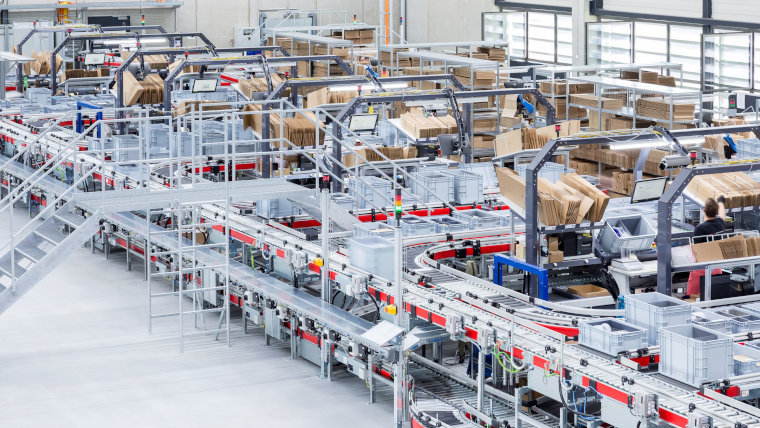
Using CrateDB, TGW accelerates data aggregation and access from warehouse systems worldwide, resulting in increased database performance. The system can handle over 100,000 messages every few seconds.
"CrateDB is a highly scalable database for time series and event data with a very fast query engine using standard SQL".
Alexander Mann
Owner Connected Warehouse Architecture
TGW Logistics Group
"Thanks to CrateDB's great indexing, dedicated data types, and subsequent great performance, we could execute an event and data-driven architecture, with the performance and scalability necessary for storing time-series data over time. The SQL query syntax capability of CrateDB also played a part in achieving this great outcome, as it made it easy for the team to write good performing queries using existing know-how. CrateDB is now an integral part of our big data streaming architecture and it is delivering as promised."
Kristoffer Axelsson
Principal Solution Architect
Thomas Concrete Group
Guide for time series data projects
This comprehensive guide covers the different key aspects of time series data projects. It is divided in 3 distinct white papers. Part 1: data modeling, storage, lifecycle; Part 2: ingestion, indexing, analysis, and optimization; Part 3: visualization, and advanced analysis through machine learning.
Go deeper on time-series data
CrateDB vs. other databases
Related use cases
Interesting articles from the blog
FAQ
Time-series data is a sequence of data points organized chronologically, illustrating how variables change over time. This format is characterized by patterns such as trends, seasonal variations, and irregularities. Effective time-series data management can significantly enhance query performance and data analysis. CrateDB supports time-series data with built-in functionalities like window functions and time-based indexes, making it easier to analyze and query the data efficiently.
Examples of time series data include temperature readings, stock prices, population growth, monthly subscriptions, quarterly sales, and interest rates. CrateDB supports time series data and offers a comprehensive solution by allowing the integration of multiple data types such as JSON, vector, full-text, geospatial, BLOB, and relational data, minimizing the need for additional technologies and complex maintenance.
Efficient storage of time series data is essential, considering factors like data volume, speed, query requirements, and scalability. The primary storage solutions include time-series databases, NoSQL databases, relational databases, and data warehouses, each offering unique strengths and limitations. CrateDB is designed to handle complex time series data with the simplicity of SQL, allowing for high ingest rates and integration of various data types, making it an ideal choice for storing and querying extensive time series data efficiently. Read more about time series data storage >
When choosing a time-series database, consider factors such as performance, scalability, query language capabilities, data model flexibility, security, maintainability, and reliability. Examples of time-series databases include CrateDB, InfluxDB, KX, and Timescale. CrateDB stands out as a distributed database that can scale horizontally across multiple nodes, making it especially suited for handling large volumes of time-series data from diverse sources in real-time. Learn how to choose the best database for time series data >
Start querying in minutes
101 for Time-Series databases
- What is a time series database?
- Key criteria for selecting a time series database.